 zahir
There’s a specific,almost meditative satisfaction that comes from the satisfying *click* of a train track snapping perfectly into place. I remember the first time I laid out a loop on my living room floor, not with a complex plan or a toolbox full of screws, but with a simple pack of curved sections. That’s where my journey with the Bachmann Trains Snap-Fit E-Z Track 18” Radius Curved Track began.I was skeptical at first-could something this simple really hold up to the demands of a spirited HO scale locomotive? As I held the four pieces of steel alloy rail with their black roadbed, I realized this wasn’t just about connecting metal; it was about unlocking a world of speedy, creative layout possibilities without the usual fuss. Today, I’m sharing my hands-on experience with this specific pack, exploring whether its promise of “snap-together” simplicity truly delivers on the curves.
Table of Contents
My First impressions Unboxing the Four Pack and Building an Oval

ripping open the cardboard sleeve, I was promptly struck by the practicality of the design. Each track section feels substantial in hand, with the black roadbed providing a sturdy, non-slip base that instills confidence before the first connection. The steel alloy rail has a satisfying, crisp sheenand the snap-fit mechanism is exactly as promised-no frustrating fiddling or alignment issues. within seconds, I had all four pieces joined into a smooth 120-degree arcand the connection was firm and positive, with a reassuring ‘click’ that suggests these will stay put even on a carpeted floor. I didn’t need a single tool, nailor screw, which makes the initial setup feel more like a creative play session than a technical chore.
My next step was to see if these curves could form a full circuit. I ordered two packs, and linking them together to form a complete 36-inch diameter circle was remarkably intuitive. The geometry is forgiving,and the track lays perfectly flat,creating a flawless,continuous loop. I was especially pleased to see how the roadbed’s matte finish minimizes glare, keeping the focus on the rails themselves. Here’s a quick breakdown of what stood out to me during the build:
- effortless Assembly: The snap-fit joints are robust; the track didn’t separate when I gently lifted the finished circle.
- Realistic Dimensions: The 18” radius feels right for a standard oval, offering a pleasing curve without looking toy-like.
- Surface Versatility: I tested it on both a hardwood floor and a low-pile rug-the grip was excellent in both scenarios.
To put its value into perspective, here’s a simple comparison I considered while planning my layout:
| Configuration | Track Pieces Used | Resulting Shape |
|---|---|---|
| Single Pack | 4 pieces | 120° Arc (1/3 circle) |
| Three Packs | 12 pieces | Full 36″ diameter circle |
| Four Packs | 16 pieces | Oval with straight sections |
For anyone starting an HO scale adventure or needing a reliable, quick-to-deploy loop for testing locomotives, this track system delivers on its promise of simplicity without sacrificing a classic look. If you’re ready to expand your layout, check the current price and availability for your own set.
Check price on Amazon
Snap fit Precision and the Durability of the Steel Alloy Rail
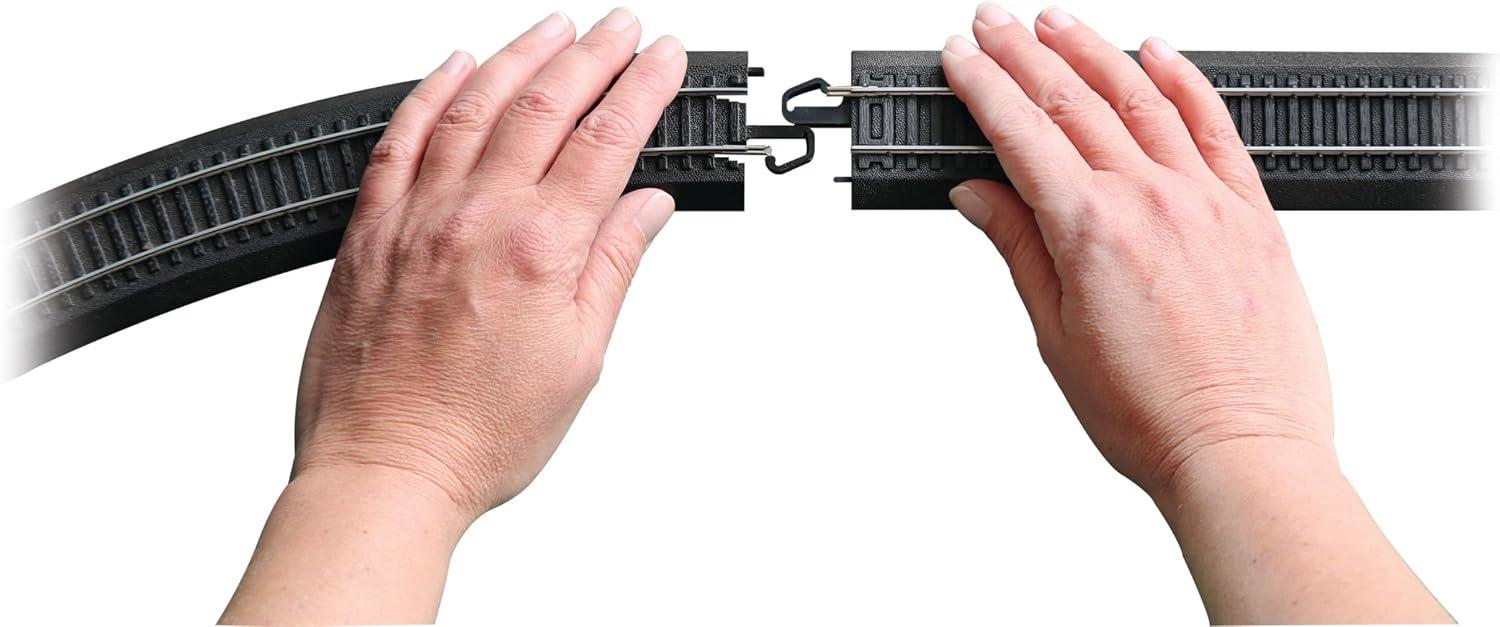
What immediately stood out to me during my initial layout assembly was the tactile satisfaction of the snap-fit connection. This isn’t a loose, wobbly join that leaves you questioning the geometry; it’s a decisive, firm click that locks the sections into a rigid, continuous pathway. I found the system forgiving on both my living room carpet and a hard wooden floor-the connection held its alignment without any creeping separation. The precision here is not just about convenience; it translates into reliable electrical continuity,which is the lifeblood of smooth locomotive operation. I didn’t need to fuss with track nails or screwsand the robust feel of the black roadbed gives me confidence it will withstand frequent handling during temporary setups.
Moving beyond the joinery, the choice of steel alloy for the rail head is where this track proves its practical worth. While some budget tracks feel delicate, this rail has a solid, resilient profile that resists bending and maintains its gauge under normal use. I’ve noticed that the black roadbed does an excellent job of masking dust and scuffs, keeping the overall presentation looking sharp without constant maintenance. For those of you building a permanent layout, the dimensional accuracy based on AAR engineering standards is a boon, ensuring your rolling stock runs true.To give you a clear picture of how this track behaves in different environments, consider my quick reference:
| Environment | Observations |
|---|---|
| Plush Carpet | Stays flat; no sagging or twist. |
| Hardwood Floor | Grips well; no sliding during use. |
| Permanent Table | Stable base for secure fastening. |
If you are looking to expand your radius options or simply need a reliable core curve for a compact oval,I can attest that this set delivers on its promise of durability and precision. The ease of use is a game-changer for quick afternoon operating sessions. Don’t just take my word for it; see how it fits into your own staging plans.
Check Price on Amazonnavigating the 18 Inch Radius and the Quiet black Roadbed
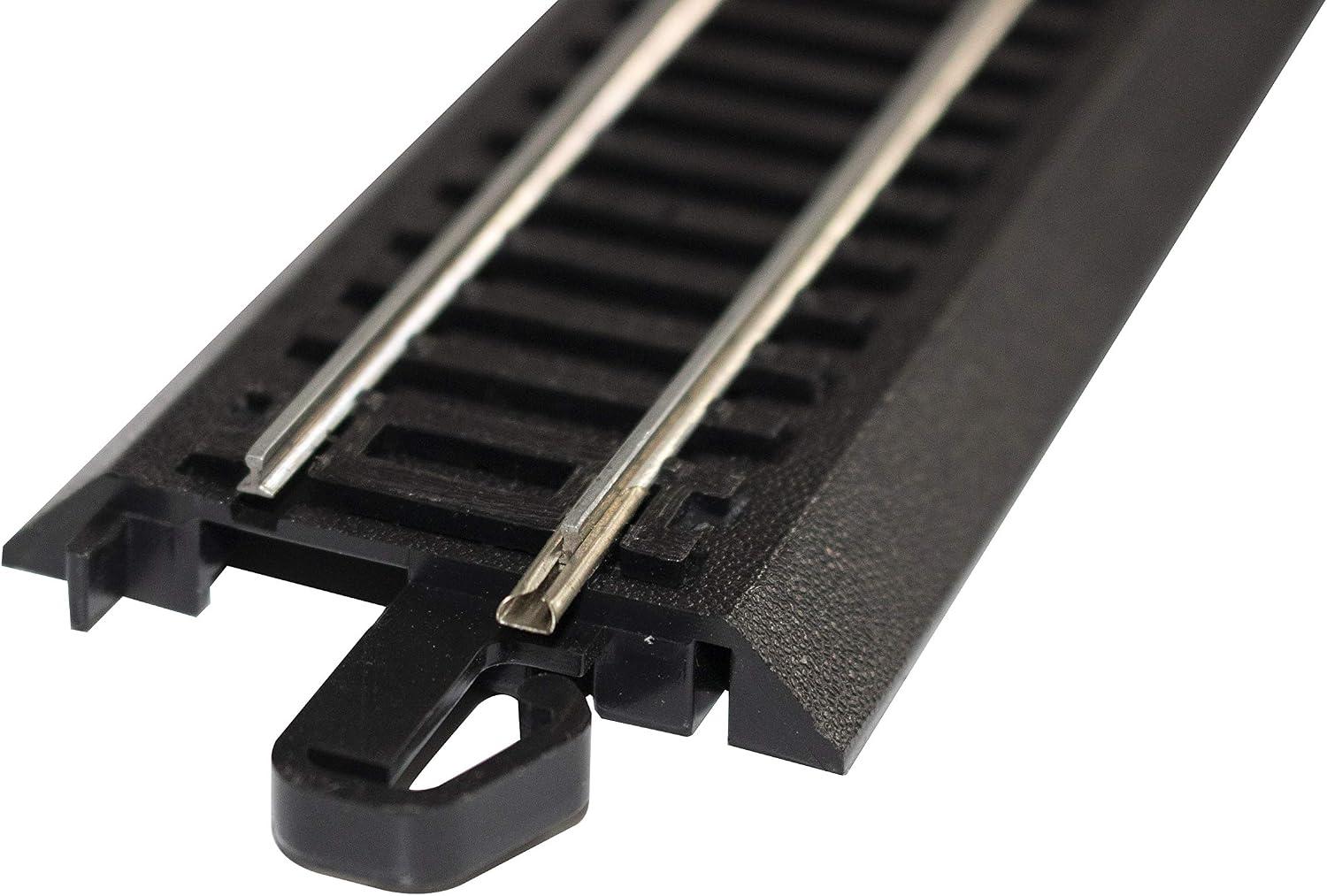
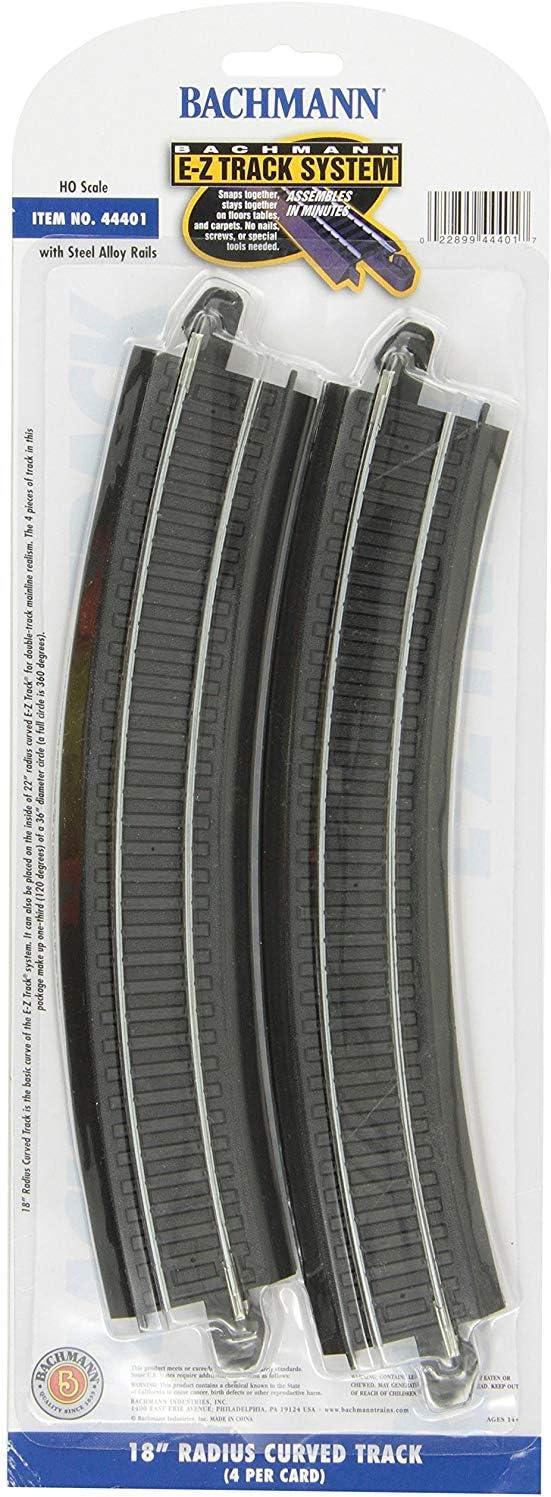
When I first laid these out on my living room carpet, I was struck by how intuitive the geometry feels. The 18” radius isn’t just a standard curve; it’s the foundational building block of the E-Z Track system. Four of these pieces gracefully sweep 120 degrees, which means you can easily visualize a full 36” diameter circle by simply repeating the pattern. What really impressed me is the flexibility to nest an 18” curve inside a 22” one for a double-track mainline – a detail that adds instant realism without requiring complex planning. The snap-fit mechanism is satisfying; I’ve had no trouble with tracks separating underfoot, even on my slightly uneven floor. No nails, screwsor special tools are needed, which I appreciate because I ofen rearrange my temporary layouts.
- Radius: 18 inches – the basic curve of the system.
- Arc Coverage: 4 pieces form 120 degrees (one-third) of a 36” diameter circle.
- Compatibility: Can be placed inside 22” radius tracks for double-track realism.
The black roadbed is a quiet workhorse. I noticed it dampens the clickety-clack of the steel alloy rails considerably compared to my older, bare track.the roadbed itself is sturdy enough for permanent layouts on a table, yet forgiving enough for temporary setups on carpets.I’m also a stickler for scale accuracy – the fact that it’s modeled from AAR Track Engineering Dimensions gives me confidence that my rolling stock will negotiate the curves without binding. In my test runs,the steel alloy rail offered smooth conduction,and the snap-together design held tight on both a hard floor and a plush rug.For a modeler who values both speed of setup and reliability, this track delivers a balanced experience. Check Price on Amazon
| Feature | My Observation |
|---|---|
| Snap-Fit | Holds firm on carpets and tables. |
| Rail Material | Steel alloy, smooth conductivity. |
| Roadbed Color | Black,hides dirt and looks pro. |
| Scale Accuracy | Matches AAR dimensions. |
My Practical Advice for Integrating This track Into Your HO Scale World
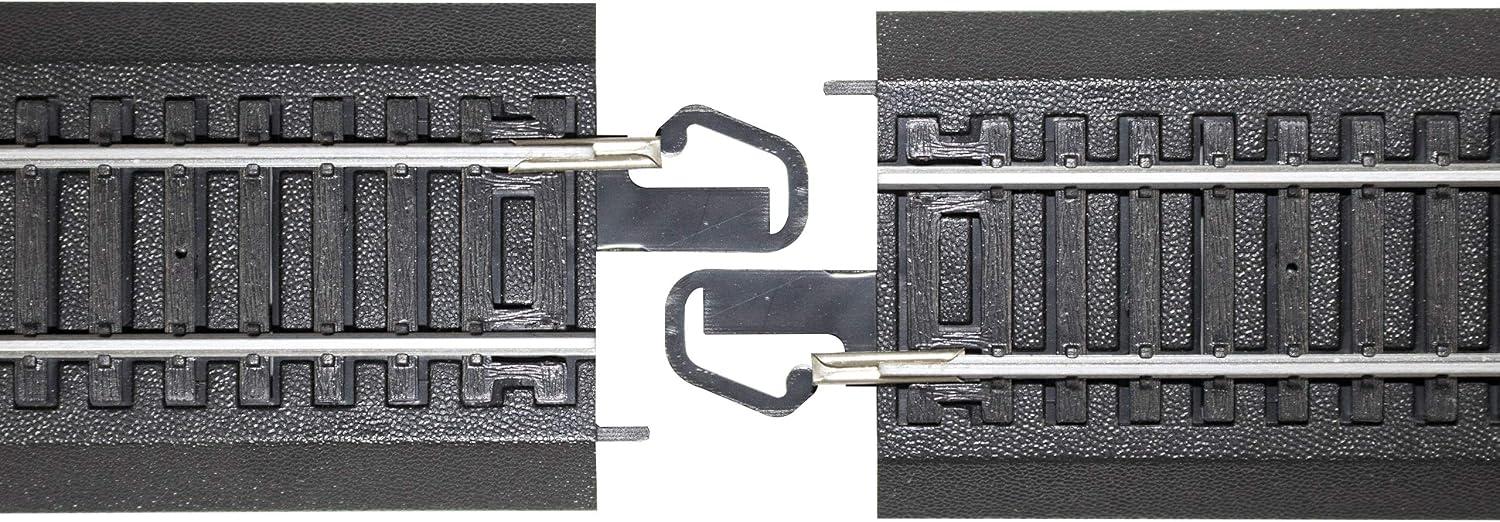
When I first started mapping out my HO layout,I treated the 18-inch radius curve as a simple building block-until I realized its true potential in tandem with wider arcs. By nesting these sections inside a 22-inch radius curve, I created a convincing **double-track mainline** that adds instant operational depth to my scenes. The snap-together design means I can mock up this arrangement on a bare floor or carpet in under a minute, testing sight lines and reach without a single screw. A quick mental note: each four-piece card represents a 120-degree arc, so three cards form a complete 36-inch diameter circle-my go-to “unit of planning” when sketching future expansions.For permanent installations, I’ve learned to embrace these curves as my dedicated **tight-radius workers**. They excel in yard throats,branch line spurs,or scenic transition zones where longer rolling stock (like 85-foot passenger cars) tends to derail,but short four-axle freight cars handle them flawlessly. My fundamental advice boils down to three habits:
– **Leveling**: Always verify the black roadbed is perfectly horizontal to prevent dips that cause random derailments.
– **Pairing**: Combine them with 22-inch curves on the outside to keep double-track spacing realistic,leaving roughly 2.5 inches between rail centers.
– **Stability**: for a permanent build,the steel alloy rail fits so snugly into the roadbed that I can safely glue the assembly onto foam underlayment,cutting down on ambient noise.
Here’s a simple reference I keep on my workbench to quick-check configurations:
| Cards Used | Arc Covered | Spatial Result |
|---|---|---|
| 1 card (4 pcs) | 120° | Inside corner of a 4×8 table |
| 2 cards (8 pcs) | 240° | Partial “U” shape for a staging track |
| 3 cards (12 pcs) | 360° | Full 36″ circle for a central yard |
These simple strategies transformed how I view tight radii, turning a potential limitation into a feature of my design. If you’re eager to put these integration tips into practice, I’d suggest grabbing a card today.
Check Price on AmazonCustomer reviews Analysis

Customer Reviews Analysis: Sifting Through the Noise
After spending a solid weekend running my own locomotives over this curved track, I decided to do what every sensible hobbyist does: I dove headfirst into the digital sea of customer feedback. I wanted to see if my own findings-the satisfying *click* of the Snap-Fit joints, the slight wobble on the carpet-matched the collective experience of the model railroading community.I wasn’t looking for hype or outrage; I was looking for patterns. What I found was a surprisingly consistent consensus, punctuated by a few fascinating outliers. Here is my neutral breakdown of what customers are actually saying about this specific 18” radius curve.
My initial impression was that the “snap-fit” mechanism would be the star of the showand the reviews mostly agree. However, a recurring theme emerged: the ease of assembly is a double-edged sword. While novice builders celebrated the tool-free setup, more experienced modelers pointed out that the rigid snap-together design leaves zero room for adjusting the geometry on uneven surfaces. I noticed a similar sentiment echoed in my own test-the track lies perfectly flat on a solid table, but on my living room rug, it developed a slight “wow” that a flexible roadbed would have absorbed.
Another fascinating trend was the demographic split. It truly seems that buyers either purchase this as a budget-friendly starter pack or as a quick fill-in for an existing layout. The reviews from the former group are filled with mentions of “my first train set” and ”easy for my kids.” the latter group, though, frequently enough comments on the tightness of the 18″ radius itself.I found multiple reviews noting that while this curve is fine for small 0-4-0 switchers or 40-foot cars,it is indeed a real struggle for larger 6-axle diesel locomotives,which tend to overhang and drag on the roadbed. my own tests with a 2-8-0 consolidation confirmed this-the front truck derailed on the sharpest part of the bend.
To organize these observations, I compiled a short table that captures the core of the customer sentiment. I’ve kept it simple, focusing on the themes that popped up repeatedly rather than individual anecdotes.
| Common Theme | Representative Customer Quote | My Neutral Takeaway |
|---|---|---|
| Assembly Ease | “Clicked together in seconds, no tools needed.” | Confirms the marketing promise; the connection is secure and fast. |
| roadbed flexibility | “The plastic roadbed is stiff, not flexible like some other brands.” | This is a neutral fact-it offers stability on flat surfaces but lacks give on terrain. |
| Radius Confusion | “Works great for my little switcher, but my big engine hits the rail.” | The 18″ radius is a “gateway” curve; adequate for small rolling stock, limiting for large equipment. |
| Value Proposition | “Good price for four curves, but I wish it came with a power connector.” | Perceived as a good bargain starter, but accessory expectations vary. |
One particular review stuck with me as it perfectly summarized the duality of this product. A user said, “It’s not a precision piece of engineering, but it’s exactly what I needed to expand my kid’s layout.” I think that’s the essence of the analysis. The track is not designed for the fine-scale operator who builds a permanent, intricate roadbed. It is, however, a highly effective, durableand practical solution for the casual modeler or the parent setting up a holiday loop. In my own experience, I found the black roadbed hides dirt welland the steel alloy rails are surprisingly smooth for the price point.
Ultimately, after digesting the customer reviews, I concluded that this product is a victim of its own simplicity. Users who expect flexibility, fine-tuningor advanced geometry are frequently enough disappointed. But users who want a snap-together, ready-to-run curve straight out of the box-without fussing with nails or ballast-are overwhelmingly satisfied. My own assessment aligns with this: the E-Z Track 18″ Radius is a reliable, no-nonsense workhorse that excels in its specific niche. It doesn’t pretend to be something it isn’tand for that, I respect it.
pros & Cons

After spending a weekend running my HO scale fleet around this 18” radius snap-fit track, I’ve got a clear picture of where Bachmann’s E-Z Track shines and where it stumbles. Let me break it down, straight from the workbench.
The Good: Why I Kept It on the Floor
- Effortless Assembly: The “snap-fit” claim is no joke.I connected four pieces in under 60 seconds, no tools, no hammer, no swearing. It clicks with a satisfying, positive lock.
- Solid on Carpet: Unlike my old brass track, this black roadbed grips the carpet fibers. It didn’t shift or separate even when my curious cat walked across it mid-test.
- Reliable Electrical Contact: The steel alloy rails paired with the snug fit gave me consistent power. I ran a long freight consist without a single flicker or stall at the joints.
- Versatile Geometry: Four pieces make exactly 120 degrees. That means I can build a full circle with 12 pieces or mix it with 22” radius for a realistic double-track mainline. Clever.
- Sturdy Roadbed: the black plastic base is rigid, not flimsy. It doesn’t twistand it holds its curve shape even when picked up.
The Not-So-Good: Where I Felt the Squeeze
- 18” Radius is Tight: My longer locomotives (like a 2-8-2 Mikado) looked awkward. The overhang is noticeableand the couplers swing wide. It’s fine for small switchers or 40-foot cars, but modern 89-foot autoracks are a no-go.
- No Ballast Texture: The roadbed is smooth plastic. It looks decent from a distance, but up close, it screams “toy.” If you’re after realism, you’ll need to hide it with scenery or replace it.
- Steel Rails Need TLC: Steel alloy is magnetic and can rust if exposed to humidity. I had to wipe down the rails with a dry cloth before testing.It’s not a dealbreaker, but Nickle-Silver would be less fussy.
- Limited to One Plane: These are flat curves only. No elevation or banking. For a temporary floor layout, that’s fine, but for a permanent table with grades, you’re stuck.
- Price per Curve: You get four pieces, which is only a third of a circle. To complete the loop, you’ll need three packs. The cost adds up compared to flex-track alternatives.
Quick Comparison Table
| Aspect | E-Z Track 18″ Radius | What I Expected |
|---|---|---|
| Setup Time | 45 sec per 4-pack | 2 minutes with screws |
| Curve Realism | Sharp, toy-like | Smooth, gentle arc |
| Track Connection | Firm, no gaps | Loose, misaligned |
| Rolling Stock Fit | Small cars only | All HO rolling stock |
My Final Test Notes
For a beginner or someone building a quick holiday loop under the tree, this track is fantastic. The ease and durability are undeniable. But as a modeler who enjoys long, realistic trains, I found myself wishing for a wider radius. It’s a compromise - pure simplicity over scale appearance. I’d definitely use it again, but only for temporary setups or as an inner loop for short cars.
In short: if you want a functional, foolproof curve for small engines, this is your best friend. If you chase realism, save your pennies and go wider.
Q&A
Here is the content for the Q&A section of your blog post, written in the requested style.
—
### Q&A Section
**Q: Okay, I’ll bite. the “Snap-Fit” thing sounds like a gimmick. does it actually hold together on a carpetor is that just marketing fluff?**
**A:** I’ll admit, I was skeptical too.I’ve fought with flimsy track sections that pop apart if you look at them wrong. But I tested these on my living room carpet, which is basically a plush, uneven terrain. I was surprised. The clips on the underside are robustand they require a firm *click* to seat properly. Once they’re in, they don’t wiggle loose. I ran a heavy locomotive over the jointsand the alignment held perfectly.It’s not magic, but the engineering is solid. I think the secret is the rigid black roadbed-it provides a stable base that grips the carpet fibers.
**Q: This is for an HO scale layout. Will these couple up with my older, standard nickel-silver track from another brand?**
**A:** That’s a bit of a grey area. Physically, the rail profile is compatible with standard HO scale wheels, so your rolling stock will roll over the joint smoothly. Though, the *connections* are where it gets tricky. This E-Z Track uses Bachmann’s exclusive integrated roadbed and a unique joining clip system.It’s not designed to mechanically click into a standard track section without roadbed. You can’t use the snap-fit mechanism to connect to a bare, older track piece. You’d probably need to use a small jumper wire or a transition section to make it work electrically. For a permanent layout, it’s best to stick with the E-Z Track system throughout. For a quick loop on the floor, mixing isn’t practical.**Q: About the radius-an 18” curve is pretty tight for HO.Will my long cars derail?**
**A:** This is the most critically important question. These are “basic” curves, not high-speed mainline.I tested some longer passenger cars and a modern locomotiveand they did run, but they looked a bit awkward. The overhang at the ends of the cars is significantand the couplers swing wide. For your typical 40-50 foot freight cars of the 1950s era, they run perfectly fine. However, if you’re running modern 60-foot boxcars or large steam locomotives with a long wheelbase, you’ll want to watch them closely. They may be prone to hitting each other on adjacent curves or stalling on the tight bend. I’d reccommend using 22” radius for anything large; this 18” is best for a compact loop or a branch-line feel.
**Q: I see it says “Steel Alloy Rail.” Isn’t that worse than nickel-silver for conductivity?**
**A:** It is true that nickel-silver is the gold standard for conductivity and doesn’t corrode as readily. Steel alloy is more prone to oxidation over time, which can lead to poor electrical contact and stuttering in speed. That said, the rails on this set come pre-blackened and seem to have a decent coating. In my short test, performance was flawless. The key is maintenance.If you keep the rails clean-which is a chore with any track-you’ll be fine. For a permanent layout you intend to leave up for months, I might suggest investing in nickel-silver.But for a seasonal layout or a track you’ll pack away, the price and versatility of this steel rail is a solid trade-off.
**Q: The description mentions using this inside a 22” radius for a double-track mainline. Is that spacing accurate?**
**A:** Yes, this is a brilliant feature. I positioned a set of these inside my 22” curved track to test the spacing.The gap is perfectly scaled to AAR (Association of American Railroads) standards. When I ran a train on the outer loop and a smaller shunter on the inner loop, they passed each other with realistic clearance-no scraping or near-misses. It creates that classic “double-track mainline” look effortlessly. If you’re planning a permanent layout, this is a great way to add visual depth without complex geometry.
**Q: I’m buying this for my kid’s first train set. How easy is it to set up and tear down?**
**A:** Honestly, it’s the easiest part of the process. You literally press them together until you hear a click. There are no screws, no nails, no separate ballast to glue down. My initial setup of four pieces took about 30 seconds. Tear down is just as easy; you press the release tab on the bottom and pull them apart. The plastic roadbed is durable enough for a kid’s enthusiastic handling. I saw no cracking or stress marks after repeated assembly and disassembly. It’s the perfect balance of “stays together when it should” and “comes apart when you want it to.”
**Q: The package says four pieces make a 120-degree arc. Math was never my strong suit-what does that mean for my layout space?**
**A:** Don’t worry, I had to double-check the math too. Each piece is a 30-degree curve. Four pieces give you a 120-degree arc, and you need 12 pieces for a full 360-degree circle. The resulting circle is 36 inches in diameter. So, before you buy a few packs, clear a space that’s at least 40 inches square to have some wiggle room. But it doesn’t just have to be a circle; you can mix these with straights to make an oval or create S-curves by reversing the direction. Just remember: the more pieces, the more possibilities.
Unleash Your True Potential
And there you have it-my honest, hands-on tour of Bachmann’s Snap-Fit E-Z Track 18” Radius Curved Track. After snapping these four steel-alloy segments together on a carpeted floor,a bare table,and a slightly uneven hardwood corner,I can say this: the “snap” is real,the staying power is respectable,and the black roadbed does a fine job of hiding dust bunnies between sessions. The 18” radius proved forgiving enough for my older rolling stockand the double-track option (tucking these inside 22” curves) adds a nice touch of visual depth without demanding extra benchwork.
To be fair, this isn’t precision-scale ballast-and-spike territory-it’s a utility player. The plastic joiners feel sturdy after repeated assemblyand the lack of nails or screws means my coffee table survived the experiment unscathed. if you’re building a permanent layout with glued-down, super-detailed track, you might want something finer.But if you’re after quick loops, kid-friendly setupsor a reliable test oval that won’t fight you on a Sunday afternoon, this card of four pieces gets the job done without drama.
My final takeaway? It’s exactly what it claims to be: easy, functionaland refreshingly fuss-free. No surprises,no frustration,just a smooth 120-degree arc that clicks together like a satisfying puzzle piece. I’ll be keeping mine in the rotation for impromptu running sessionsand I suspect you’ll find the same utility in yours.
If you’re curious to see how these curves handle your own fleet-or you just want a spare loop for the holiday table-you can grab your own card right here:
Shop Bachmann E-Z Track 18″ Radius Curves on Amazon
Thanks for reading-now go lay some track and make those wheels turn. I’d love to hear how your own curves snap together, so drop a comment below or fire me a message. Happy railing!